The ROI of a Civilization
Remember when you were a kid and you thought adults had it all figured out?
You assumed the people running governments, corporations, and institutions were extraordinary. They were the brightest minds in the room. Someone, somewhere, was thinking ten steps ahead.
Then you grow up.
You enter the workforce.
You sit in the meetings.
And eventually you realize something that’s both disappointing and strangely liberating.
The answer is much simpler.
Most people aren’t playing 4D chess.
They’re responding to incentives, protecting careers, hitting quarterly targets, managing risk and optimizing whatever metric they’re being measured against.
We shouldn’t be surprised.
We get the behaviour we reward.
When careers are measured in years but decisions affect decades, long-term thinking becomes the exception rather than the rule.
It makes them products of systems that reward optimization over imagination
Quarterly earnings over century-long thinking
And wealth accumulation over legacy.
We’ve become exceptionally good at measuring what we own and far less interested in measuring what we leave behind.
And as a result, we’ve confused good management with visionary leadership.
Wealth isn’t the problem.
Forgetting what wealth is for is.
I didn’t have the language for it until last week.
On my drive to work, I was listening to a podcast about infrastructure when they made a point that shook something loose in my brain.
The question was simple: If we’re building something that could last a hundred years, why do we insist on judging it by a thirty-year return on investment?
The question wasn’t really about infrastructure.
It was about how we’ve learned to value things.
We stopped asking, “What will endure?”
And we started asking, “What’s the return?”
Legacy became difficult to justify.
Beauty became a luxury.
Stewardship became an afterthought.
However, many of the places we admire most today were never built with a short-term mindset.
The Sagrada Família has been under construction for well over a century. Antoni Gaudí knew he would never see it completed, yet he devoted his life to building something future generations would stand beneath in awe.
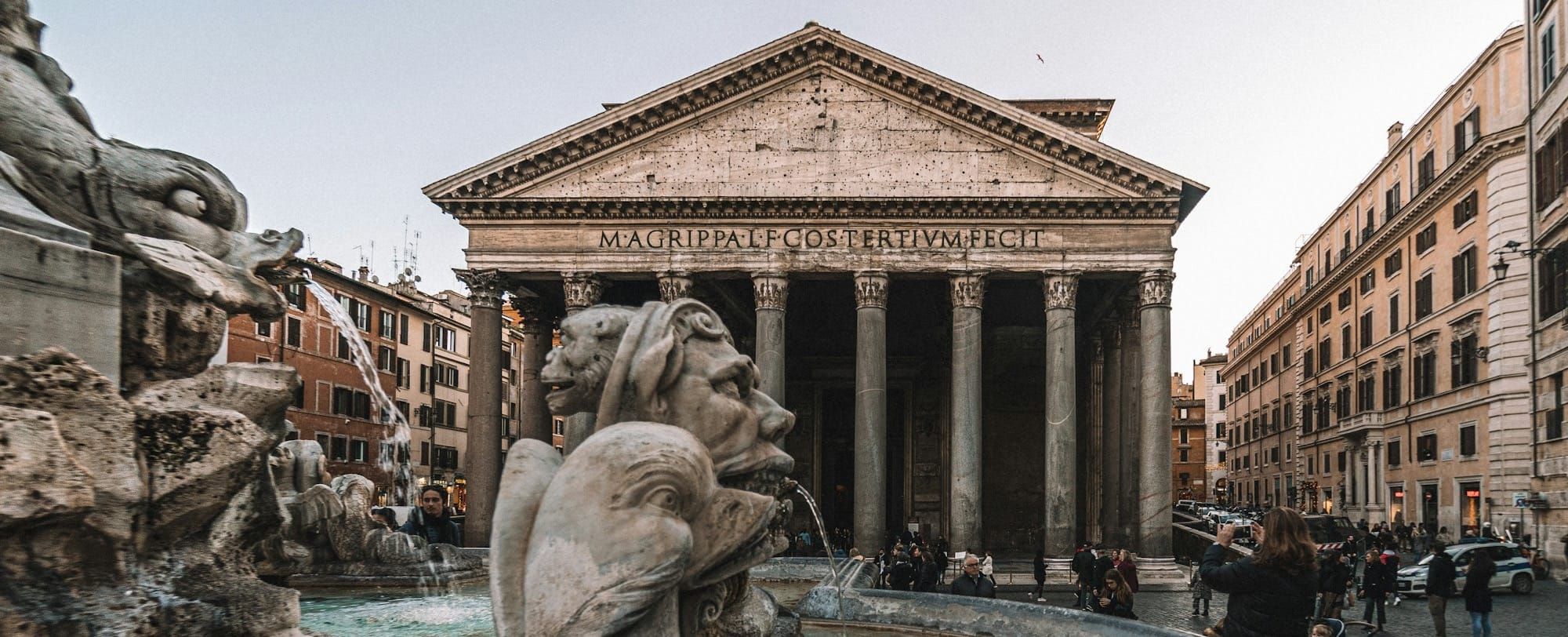
Roman roads and aqueducts served people their builders would never meet. More than two thousand years later, water still flows through parts of Rome’s ancient aqueduct system. The Aqua Virgo continues to supply the Trevi Fountain—a reminder that some of history’s greatest investments are still paying dividends millennia later.
Central Park preserved hundreds of acres of Manhattan because someone believed a great city needed more than commercial development. It needed beauty. Nature. Space to breathe.
None of these projects can be understood solely through the lens of immediate financial return. In many cases, the people who began them never lived to see them completed. They weren’t building for themselves.
They were building for the generations that followed.
That’s what legacy looks like.
That doesn’t mean economics didn’t matter. Of course they did. Great civilizations have always cared about prosperity.
But prosperity was a means, not the destination.
Wealth wasn’t the legacy.
It was the tool used to build one.
Wealth built roads, libraries, universities, gardens, museums, and public spaces. It created places that made civilization richer—not just financially, but culturally, intellectually, and spiritually.
In business, we celebrate the executive who squeezes another two percent out of quarterly earnings, cuts another layer of cost, or improves another efficiency metric.
They’re managers. And good managers matter. They make organizations more efficient, more resilient, and more effective.
In government, we’ve lowered the bar even further, rewarding leaders for rhetoric over results, headlines over outcomes, and winning the next news cycle instead of solving the next generation’s problems.
Neither is visionary leadership. But at least one of them is still producing results.
The question isn’t whether the stock price today is going to give us a massive bonus at year end.
It’s whether the decisions we make today leave our businesses, our neighbourhoods, our communities, and our world better than we found them.
It’s whether we’re becoming better ancestors.
Because every civilization is ultimately judged by what it leaves behind.
Are we building things that will still matter in a hundred years?
Are we creating communities that our children will be proud to inherit?
One day, we’ll become someone else’s ancestors.
The world they inherit will tell them everything they need to know about what we truly valued.
A civilization isn’t remembered for what it consumed.
It’s remembered for what it created.
-HHH