The Great Outsourcing: Food
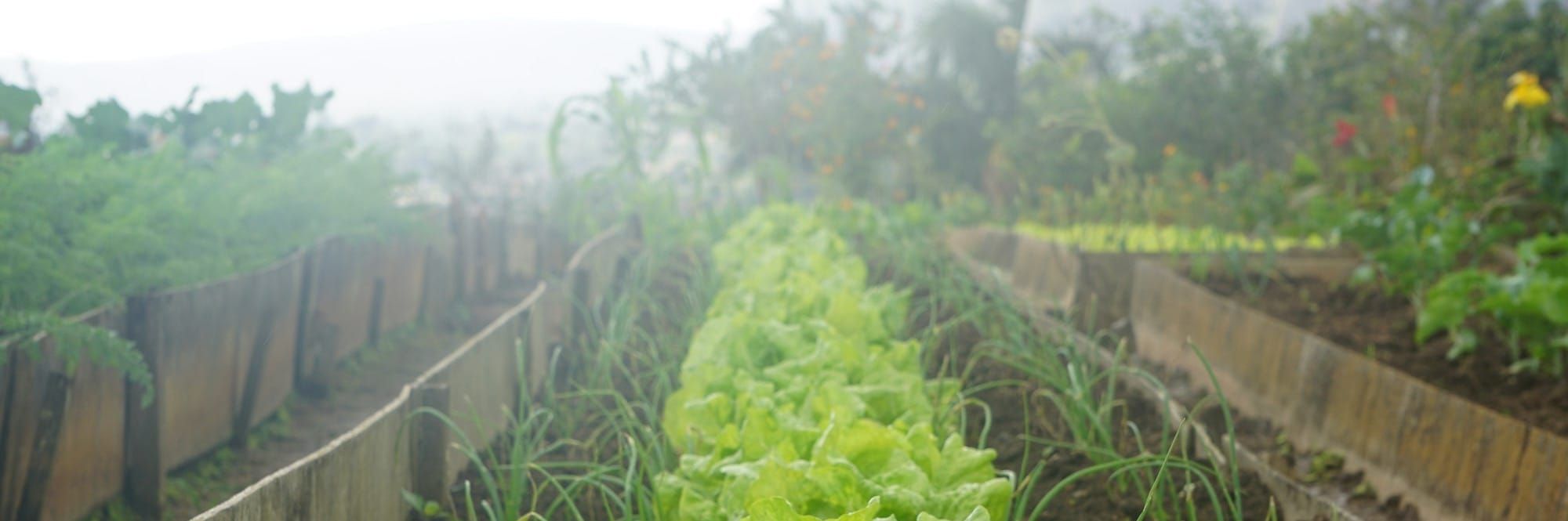
When did feeding ourselves become something we no longer really participate in?
It’s a question I’ve been thinking about a lot lately.
My grandparents worked incredibly hard raising a family on a farm in rural Canada. And while I wouldn’t trade modern refrigeration, indoor plumbing, or the ability to buy fresh produce in the middle of a Canadian winter, I do wonder if we’ve become so focused on making food faster, cheaper and more convenient that we’ve forgotten what food actually is. We’ve lost not only the knowledge that surrounded ancestral cooking, but also the relationship our ancestors had with the land, the animals, the seasons and the people who produced their food.
When previous generations fed their family, they participated in nearly every step of the process. They grew vegetables, preserved what they couldn’t eat fresh, raised animals, knew their neighbours, and understood the rhythm of the seasons because their lives depended on it. Food wasn’t just something that appeared in the kitchen. It required knowledge, work, patience, and a healthy respect for nature.
Admittedly, nostalgia has a way of polishing history. It’s easy to romanticize the past when we never had to live it.
While many of us have had the privilege of never experiencing true food scarcity, we’ve also become increasingly detached from one of humanity’s most fundamental skills
Now, we walk through the doors of a grocery store where strawberries are available in January, asparagus arrives from Peru, beef comes from one province while apples come from another country entirely. If we don’t feel like cooking, we can stop at a drive-thru, order SkipTheDishes, subscribe to a meal kit, or have groceries delivered before dinner.
I appreciate the convenience of grabbing dinner after a long day or picking something up when the craving strikes. But every convenience subtly changes our relationship with the thing it’s making easier.
As a result, most of us couldn’t tell you when tomatoes are naturally in season. We don’t know how to preserve food without a freezer, bake a loaf of bread, sharpen a kitchen knife, or grow enough vegetables to supplement a week’s worth of meals. We’ve become exceptionally good at consuming food while participating very little in producing it.
Part of that shift is the result of modern agriculture.
Industrial food systems have become remarkably efficient at producing enormous quantities of inexpensive calories.
Whether they’d equally good at producing healthy people or healthy ecosystems is a far more complicated question.
Modern agriculture largely optimizes for yield, consistency, transportation, shelf life, and profit. Those goals have given us cheap, abundant food, but they don’t always align with other priorities like soil health, biodiversity, animal welfare, flavour, or nutrient density.
Our ancestors may not have enjoyed the abundance that we have today, but in many ways we have traded it for autonomy, nutrition and connection. Eating became less about understanding nature and more about understanding industry.
The more distance we put between ourselves and the things that sustain us, the more we surrender our understanding of them. Our appreciation for them.
A few years ago, my husband spent the day helping some friends butcher a pig. When he came home, he wasn’t talking about how gruesome the experience had been. He talked about how much respect it gave him for the animal and for the work involved. He came home with a cooler full of pork that still needed to be cut, portioned, wrapped, and frozen. Nothing was wasted. Every cut had a purpose.
Our children were only two and four years old at the time, and I remember wondering whether they would be upset by what they were seeing.
Instead, they were fascinated.
They asked questions. They wanted to help. They thought it was incredible.
Watching them made me realize that children aren’t naturally disconnected from where food comes from. In many ways, we teach that disconnect. We teach that meat begins on a styrofoam tray, vegetables arrive in plastic bags, and meals simply appear whenever we want them.
We teach them that food comes from money, not from soil. That health is something you buy rather than cultivate. That eating well is a luxury instead of a foundation.
When the cheapest foods are often the most processed while fresh, high-quality ingredients carry a premium price tag, we’ve created a world where feeding yourself is affordable, but nourishing yourself often isn’t.
I don’t think the answer is abandoning grocery stores or pretending we can all become self-sufficient. Very few of us have the land, the time, or the desire to produce everything we eat.
But perhaps the answer isn’t all or nothing.
Perhaps it’s reclaiming a few pieces of what we’ve outsourced.
Growing herbs on the patio.
Learning to bake bread.
Buying eggs from a local farmer.
Taking your kids fishing.
Planting tomatoes.
Cooking dinner together instead of ordering in.
Kindling a deeper appreciation for preparing food and the rituals around eating it. Restoring our connection with the things that sustain us.
Remembering that feeding ourselves was never meant to be a transaction, but a relationship.
-HHH