The Analog Revival : Essay
It’s funny how much of the technological revolution Millennials and older have experienced. From a time when digital clocks were controversial to now where everything lives in “the cloud”. So much of what we used to need physically has become unnecessary.
Maps.
Pen and paper.
Music.
Books.
Photo albums.
It’s all been digitized.
And it should feel liberating.
And in many ways, it is. Streaming your favourite shows and not having to deal with commercials is a tremendous win.
Not having to rummage through a CD holder while you’re driving is fantastic (and safer, frankly).
You can throw on Google Maps when you’re lost, or have several books at your fingertips while you’re on an airplane.
I get it. I love it. You don’t need to convince me.
But, doesn’t it all seem so fleeting?
All I can see in my head is the Klaus Schwab meme: “you will own nothing and you will be happy”.
In a world where it feels like nothing is real, cash can be crypto. Art can be an NFT. Music, books, movies exist behind a login. More and more of our physical interaction with the world has been transferred onto a screen.
Through all of the progress, it feels like we’ve lost something.
A sense of grounding, rootedness, tactility and reality.
Music for example.
Remember going to the local HMV and flipping through CDs as a teenager? You’d pick one and take it home. Open it up and play it start to finish. You might have bought it because you loved one or two songs, but then you discover another few sleepers that you connected with more than the ones that brought you in the first place.
You built a collection, it told a story about you. They became soundtracks to your days. You created memories associated with the music that you had playing in the background.
I remember my parents putting on Sade during dinner parties, Phil Collin’s on a drive to a hockey game. Tchaikovsky and Josh Groban during Christmas time. I would play Something Corporate and My Chemical Romance driving to high school.
There are eras of your life that you can pinpoint to a specific album.
Then the likes of Napster and LimeWire came along. You’d burn your CDs, and stopped buying them. Then came MP3s, and eventually streaming. While the convenience is undeniable - and the variety, discovery are incredible - there’s less intentionality to it. There’s no longer quite the same connection between you and the music.
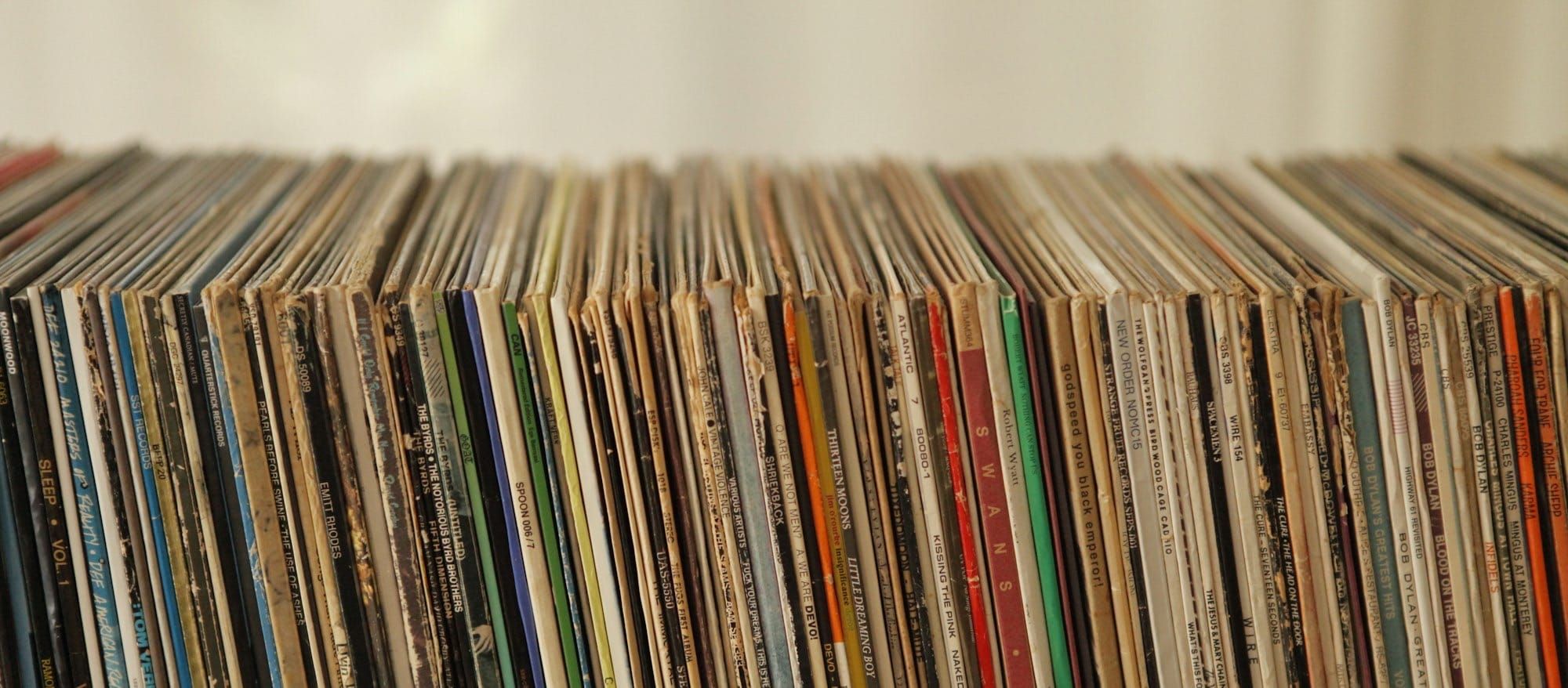
For years, I fantasized about getting a record player. A few months ago, we finally got one, and it has been one of the most fun things we’ve done. Deciding which records we want, going to a record store, flipping through the stacks, finding something we want to bring home. It has rekindled my love for music and collecting in a way I didn’t expect.
Now we’re getting the kids involved.
They pull out Queen, the Eagles, Supertramp. They ask to put on the record. They ask to flip it. They’re connecting with the music in an entirely different way.
And hopefully, they start to build those memories with the music we put on too.
Books make me feel much the same way.
Yes, they’re cumbersome. They take up space. They get dusty. But sometimes you want to just go back to read a classic in a beautiful cloth bound cover. Something that has stood the test of time. Something with a sense of permanence. Something that isn’t floating around in the aether.
The information that is out there on the World Wide Web sometimes feels strangely ephemeral. Websites disappear. Articles change. Information gets buried, distorted or optimized for clicks. It sometimes feels corrupted. Like a security blanket, you reach for something that is physical. That existed before you and will exist after you. That doesn’t change based on what is politically correct or the social issue of the day.
And then I think about photographs.
We probably have more pictures than any generation in history, and yet so many of them are sitting on a server somewhere, completely forgotten. Meaningful moments waiting for someone to scroll back far enough or open up a folder on a hard drive.
Imagine instead a photo album sitting on a coffee table.
Your kids are bored, so they pick it up. They flip through it and see how silly you looked in grade school. See what they looked like as a baby. Reminisce about an old vacation. And come across some incredible stories by way of luck.
That kind of accidental discovery is becoming increasingly rare.
Maybe that’s why this feels bigger than nostalgia
These days, it feels like nothing belongs to us.
Our houses are mortgaged.
Our cars are leased.
Our money is basically imaginary.
Everything is subscription-based.
Books, shows, music. It all can disappear.
And I think thats why so many people are starting to revive some of the analog cornerstones of the past. Trying to find meaning, identity, and reality in things you can touch.
To have things around us that carry history. That remind us where we came from. Things that tell our children about who we were before they were born. Things they can stumble across, hold in their hands and potentially pass down to their own children.
Maybe that’s what we’re really looking for.
In a time when so much of our lives exists in a digital world, there is something comforting about knowing that pieces of us can still remain here.
Something physical.
Something tangible.
Something that’s ours.
-HHH
 -HHH
-HHH